
What Is AEO and Why Are Businesses Talking About It?
AEO (Answer Engine Optimization) is the practice of structuring your content so AI-powered search tools and voice assistants pull your business directly into their answers. Businesses are talking about it because search is shifting from “ten blue links” to instant, single-source answers — and the companies that get cited win the click (or the customer) before competitors even show up.
I’ve spent 15 years building websites and chasing rankings for small businesses, and I’ll be honest with you: the rules just changed again. For most of that time, the job was straightforward — write good content, earn links, optimize your pages, climb Google. But the question I get asked most lately isn’t about rankings at all. It’s “what is AEO, and do I actually need to care about it?” Short answer: yes. Longer answer below, with no fluff and no fear-mongering.
This post is the breakdown I wish someone had handed me when AI search results first started eating into traffic I’d worked hard to build. I’ll walk you through the AEO meaning in plain English, where it overlaps with SEO, where it splits off, and exactly how I’d start if I were you. Let’s get into it.
What Is AEO? Answer Engine Optimization Explained
Answer engine optimization is the work of getting your content selected as the answer — not just a result. An “answer engine” is any tool that responds to a question with a direct reply instead of a list of links. Google’s AI Overviews (formerly Google SGE), ChatGPT search results, Perplexity, and the voice that talks back when someone asks Siri for a plumber — those are all answer engines.
Traditional search hands you a menu and says “pick one.” An answer engine reads the menu for you and just tells you what to order. That’s the shift. Your goal with AEO is to be the source it quotes, links, or recommends when someone asks a question your business can solve.
Here’s a concrete example from my own work. A local HVAC client of ours used to rank #3 for “why is my AC blowing warm air.” Solid spot. But once AI Overviews rolled out, Google started pulling a two-sentence summary straight from a FAQ block we’d written — and it cited the client by name above the regular results. Same content, restructured for a direct answer. That citation drove more qualified calls than the #3 ranking ever did.
AEO isn’t a replacement for SEO — it’s the layer that decides whether AI search engines treat your content as a source or skip it entirely.
Why AI Search and Voice Assistants Are Critical for Small Businesses
The behavior change is real and it’s measurable. A 2024 Gartner report predicted that traditional search engine volume would drop 25% by 2026 as users shift to AI assistants and chatbots. That’s a quarter of the front door you’ve been relying on, moving somewhere else. If you’re a small business that lives on local search, that’s not a trend to watch — it’s a bill coming due.
Voice search optimization matters here too, and it’s been creeping up since 2019. When someone asks their phone “where’s the best taco place open right now,” the assistant gives one answer. Not three. Not a page of options. One. Being that one answer is the entire game, and it rewards businesses with clean, structured, locally-relevant content far more than it rewards big ad budgets.
From what we’ve seen, small businesses actually have an edge in conversational AI queries. You can answer hyper-specific questions a national chain never bothers with — “do you take walk-ins on Sundays,” “is your patio dog-friendly.” Those long, natural questions are exactly what people type and speak into AI search, and they’re where a focused local business can quietly outrank everyone. Our local SEO quick wins guide covers a few of these moves in detail if you want to start today.
AEO vs SEO: What's Actually Different (and What Stays the Same)
Let me clear up the biggest misconception first: AEO vs SEO is not an either/or fight. Good AEO is built on a foundation of good SEO. If your site is slow, disorganized, or invisible to crawlers, no amount of clever formatting will get you quoted by an AI. The fundamentals still rule, and anyone telling you SEO is dead is selling something.
So what’s the same? Quality content, a fast and crawlable site, real authority, and genuine relevance to what people are searching for. None of that goes away. What changes is the target and the format of the win.
What’s Different in Practice
SEO optimizes to rank a page. AEO optimizes to be the answer extracted from that page. That difference reshapes how you write. Instead of burying your best sentence in paragraph six, you lead with a tight, direct answer an engine can lift cleanly. You write for search intent optimization first — what is the person actually trying to learn or do — then build the supporting detail underneath.
The metrics shift too. SEO obsesses over rankings and clicks. AEO has to account for zero-click searches, where the user gets their answer without ever visiting your site. That sounds like bad news until you realize being the cited source builds trust and brand recognition even without the click — and it often drives the higher-intent visits that actually convert. We dig into this balance more in our piece on why SEO is not an afterthought, because the two disciplines feed each other.
Generative engine optimization is just AEO aimed specifically at generative tools like ChatGPT and AI Overviews — same principles, newer playground.
The Real Benefits of AEO for Businesses Ready to Get Found
Let’s talk about what you actually get out of this, because “be the answer” is a nice phrase but it doesn’t pay invoices. The benefits of AEO are concrete, and they compound.
First, you capture featured snippets and AI citations that put your name above the fold before a single competitor appears. We restructured a dental client’s service pages into clear question-and-answer sections in early 2024, and within two months they were the cited source in AI Overviews for several “how much does X cost” queries in their city. Those are buyer questions. People asking about cost are close to booking.
Second, AEO future-proofs your visibility. Search is fragmenting across Google, ChatGPT, Perplexity, and voice — and content structured for answers travels well across all of them. You’re not betting on one platform. You’re building content that any answer engine can read and trust, which is a far safer position than rebuilding your strategy every time a new tool launches.
Third, and this one gets overlooked: AEO forces you to genuinely understand your customers’ questions. That clarity improves everything downstream — your service pages, your sales conversations, even your core service offerings. When you know exactly what people ask before they buy, you build a better business, not just a better-ranked one.
Building An Answer Engine Optimization Strategy: A Step-by-Step Starting Point
Theory’s fine, but you came here for something you can do. Here’s how I’d build an answer engine optimization strategy from scratch for a small business, in the order I’d actually do it.
- Mine real questions. Pull the exact phrasing customers use from your email inbox, sales calls, and Google’s “People Also Ask” boxes. Don’t invent questions — collect them.
- Answer the question first, expand second. On each relevant page, lead with a 40–60 word direct answer, then go deeper. This is the chunk an answer engine can excerpt verbatim.
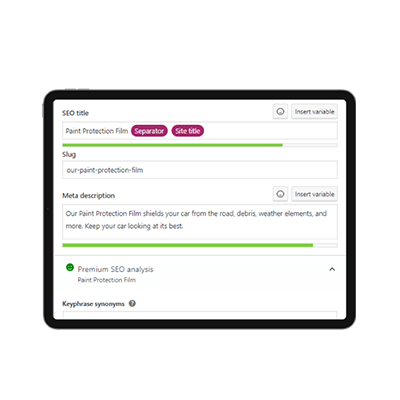
- Add structured data markup. Use FAQ, How-To, and LocalBusiness schema so engines understand what your content is, not just what it says. This is non-negotiable for getting picked up.
- Build a clean FAQ layer. Group genuine questions on service pages and in a dedicated resource hub. Our resources section is structured exactly this way for a reason.
- Tighten your technical base. Fast load times, crawlable pages, and mobile-friendly layouts. If you’re not sure where you stand, run through our website health checklist before anything else.
- Measure what gets cited. Track which queries trigger your appearances and which pages get pulled. Adjust from there.
Featured snippets optimization is the part most people get wrong, so I’ll be specific. The snippet-winning format is almost always a clear question as a heading, followed immediately by a concise paragraph or a short list. No throat-clearing, no “well, it depends.” Answer it, then justify it. That structure is what both Google and the AI engines reward.
One real example: a landscaping client of ours wasn’t getting picked up for “when should I aerate my lawn” despite having a great long article. The fix took twenty minutes. We added the question as an H2, wrote a two-sentence direct answer underneath, and added FAQ schema. They were the AI-cited source within three weeks. The content was always good — it just wasn’t structured to be answered.
Common AEO Mistakes That Quietly Kill Your Visibility
Most AEO failures aren’t dramatic. They’re quiet — the slow kind where you never appear and never know why. Here are the ones I see most, and they’re all fixable.
The biggest one is writing for yourself instead of the question. You know your product, so you write a clever brand-led headline and bury the actual answer three paragraphs down. Engines can’t easily extract that, so they skip you. Lead with the answer every single time, even when it feels too blunt.
The second is ignoring structured data entirely. I still see well-written small business sites with zero schema markup. That’s like writing a brilliant resume in a language the hiring manager doesn’t read. Schema is how you translate your content into something machines parse confidently — skip it and you’re guessing.
Then there’s the opposite mistake: chasing AEO while your technical foundation is broken. A gorgeous FAQ section on a site that takes eight seconds to load won’t get cited, because the engine doesn’t trust a slow, shaky source. Fix the foundation first. If your site needs that kind of attention, our web design and SEO services exist to handle exactly this groundwork.
The deadliest AEO mistake is treating it as a one-time project — answer engines update constantly, and stale content gets quietly replaced by fresher sources.
Last one, and it stings because it’s so common: thin, generic answers. AI engines compare sources and favor the one with real depth and specificity. “Our prices vary, contact us for a quote” gets beaten every time by a competitor who actually states a starting range and explains what affects it. Vagueness loses. Be the source that says something useful.
Why Oceans Edge Media
I’ll keep this honest, because transparency is how I run this whole operation. I’ve watched this industry shift from keyword stuffing, to mobile-first, to local search, and now to answer engines — and the businesses that win are never the ones chasing the newest trick. They’re the ones with solid fundamentals who adapt early. AEO is the next adaptation, and it’s one you can get ahead of right now while most of your competitors are still ignoring it.
At Oceans Edge Media, I do the developer work and the strategy work, so you’re not getting a templated audit from someone who’s never opened a code editor. I’ll tell you what actually works for a business your size, what’s a waste of your money, and what to fix first. No upsells you don’t need. You can get a feel for how I approach projects on our work page, or read more about how I got here on the about page.
So — what is AEO going to mean for your business twelve months from now? That depends on whether you start treating your content as answers today. If you want a straight conversation about where your site stands and what’s worth doing, reach out. I’ll give it to you straight, the same way I have for 15 years.
Frequently Asked Questions
What is AEO and how is it different from SEO?
AEO (Answer Engine Optimization) is the practice of structuring your content so AI search tools and voice assistants pull your business directly into their answers. SEO focuses on ranking your page in a list of links, while AEO focuses on becoming the single source the answer engine quotes or recommends. They overlap heavily, but AEO prioritizes clarity, structured data, and direct question-and-answer formatting over chasing the top spot.
Why are businesses suddenly talking about AEO?
Search is shifting away from the old ‘ten blue links’ model toward instant, single-source answers delivered by tools like Google’s AI Overviews, ChatGPT, and Perplexity. When an answer engine cites one business, that company wins the click or the customer before competitors even appear. Businesses are paying attention because traffic they used to earn from rankings is now being absorbed by AI answers.
What is an answer engine, exactly?
How do I start optimizing my content for AEO?
Start by writing content that directly answers the real questions your customers ask, using clear headings phrased as those questions. Add structured data (schema markup), keep answers concise and self-contained, and make sure your business information is consistent everywhere online. The goal is to make it easy for an AI to lift a clean, quotable answer straight from your page.
Does AEO replace SEO, or do I need both?
You need both — AEO builds on top of solid SEO rather than replacing it. Good SEO fundamentals like fast pages, quality content, and earned links still help answer engines trust and surface your site. Think of AEO as the next layer that positions you to be the cited source once the AI decides who to quote.
How much does AEO cost for a small business?
How long does it take to see results from AEO?
Like SEO, AEO is a long game — you typically won’t see citations or answer placements overnight. Many businesses start noticing their content referenced in AI answers within a few weeks to a few months, depending on competition and how authoritative their site already is. Consistency and clear, answer-ready content speed up the process.